

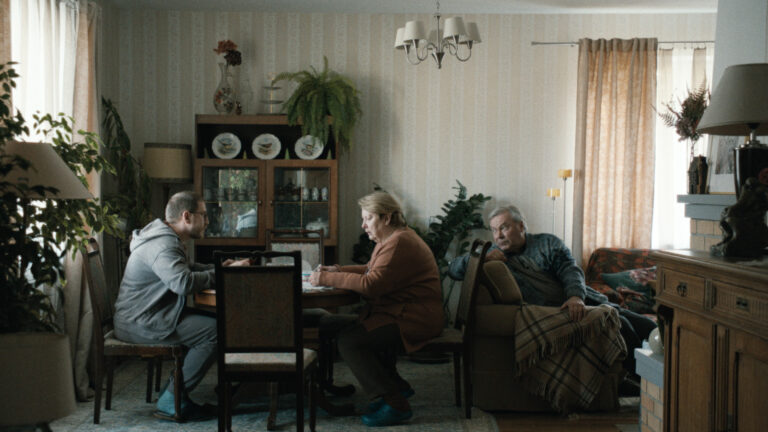
The film that won Andrius Blaževičius the award for Best Director in the World Cinema Dramatic Competition at Sundance 2026, arrives in US cinemas. How To Divorce During The War is set in Vilnius in 2022 and follows the story of high-flying executive Marija (Zygimante Elena Jakstaite) who tells her husband Vytas (Marius Repsys) she wants a divorce in the worst possible moment: just one day before Russia’s invasion of Ukraine.
During this process of separation the only thing that Marija and Vytas still have in common is their political stance against Russia’s invasion of Ukraine. As they are apart, Marija welcomes in her home a refugee family, whilst Vytas begins volunteering at a food bank, that helps the victims of the war, and takes part in performances that denounce the violence of the military action. Meanwhile he moves back in with his Russophile parents, with whom he argues constantly, and seeks distraction in the company of a prostitute. Marija finds solace in the arms of her work colleague Jurate (Indrė Patkauskaitė), but their heart-to-heart moments will be put to the test when Marija is ready to leave Hungry Rabbit, the internet company that she works for as a top manager, because she disapproves its tight connections to Russia. Through it all, Dovile (Amelija Adomaitytė), the daughter of Marija and Vytas, quietly witnesses the rollercoaster journey of her parents, and interiorises her turmoil of pubescent who has to deal with the family separation.
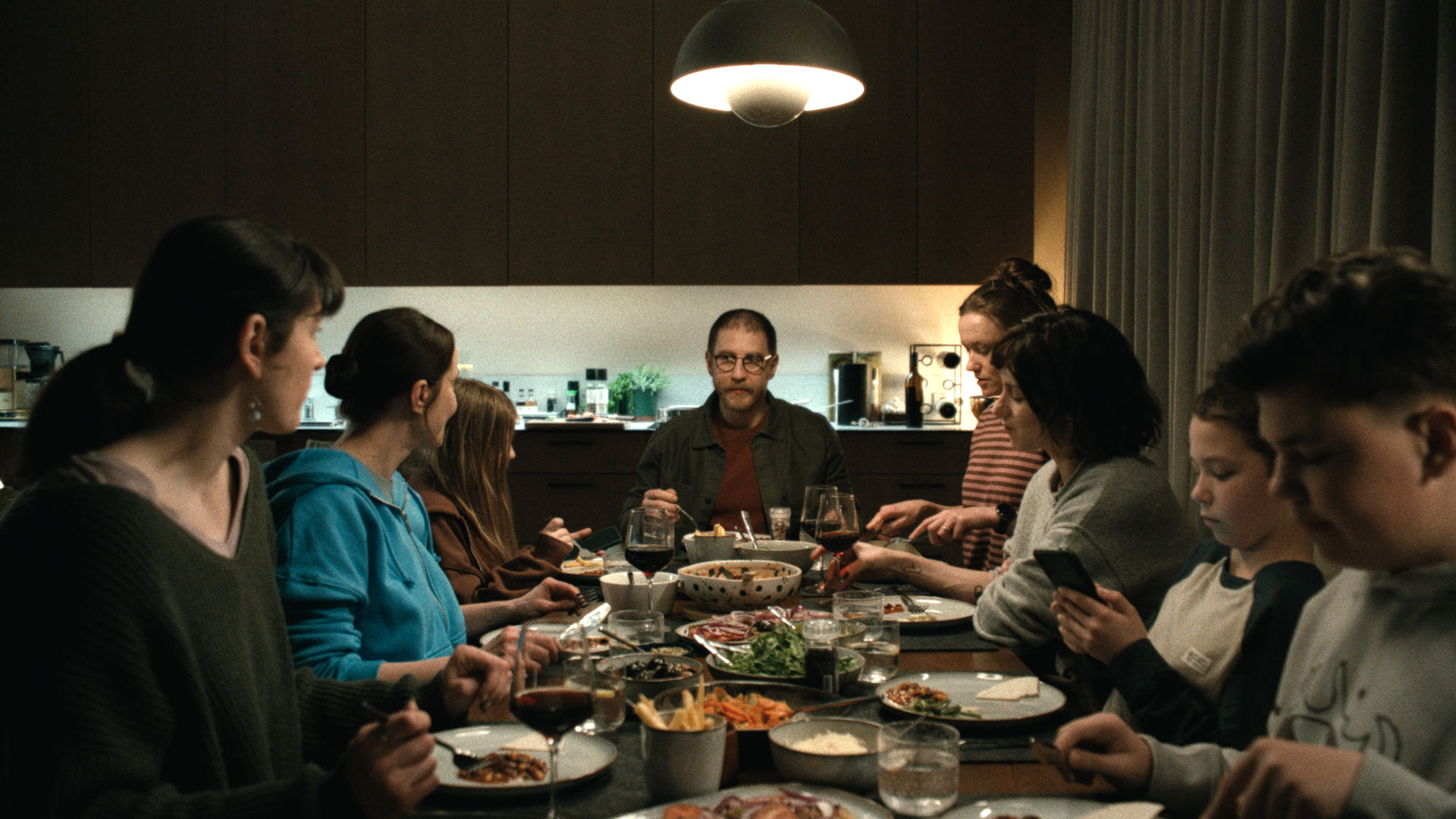
The film opening sets the mood, as we observe a man acting as the perfect househusband, scrubbing toilets and cooking, while the wife is at work being the successful breadwinner of the household. The man who used to be an acclaimed arthouse film director has failed. The woman who has given into the charm of a multinational corporation is thriving in the capitalistic society. However, once ethics kick in, everything goes topsy-turvy before returning to the quiet and monotonous reassuring life Marija considered once weary.
Andrius Blaževičius explores sagaciously how since the early 2000s the Baltic countries have been foreseeing the growing power of Putin, way before the 2008 Russo-Georgian War happened. The sentiment of discontent grew exponentially in the countries that contour the stage of this warfare. Amongst these there is Lithuania, a nation that used to be part of the USSR and is well acquainted with its propaganda machine. Consequently such countries nowadays live in fear of being the next ones to be “reclaimed.” This feeling of fear, anger, and opposition is very well embodied by Marija and Vytas, who manifest it on a daily basis, either by tossing stones at cars with Russian plates or trying to persuade colleagues at work to take a position against an oppressing country. In fact, the divorce in the title of the film, goes beyond the breakup of the protagonists, it encompasses also the societal split of people dividing themselves into factions over matters of conflict.

How To Divorce During The War takes all this a step further, because beyond idealism life gets in the way. There are bills that need to be paid, and compromises are required to carry on. Furthermore, the gender role reversals allow to analyse a new understanding of relationships in this day and age, enriching the topic revolving around gender politics.
Dovile becomes the Orwellian observer of the aggression around her, as she internalises her discomfort, keeping her face impassible. Yet self-harm is right around the corner, and becomes a cry of rebellion. Dovile holds her tears back, until they can finally pour out as a means of liberation.
The grey cinematography by Narvydas Naujalis and reflective rhythm of editing by Anna Johnson Ryndová, effectively amalgamate with the bittersweet tone of the black comedy. How To Divorce During The War ultimately comes across as a meditation upon the impermanence and vulnerability of the human condition.
Final Grade: B
Photos credits: ZeitgeistFilms