

ⓒCourtesy of GKIDS
Courtesy of GKIDS
Exclusive Interview with Director Baku Kinoshita
Q: Mr. Kinoshita, you previously teamed up with writer Kazuya Konomoto on the TV anime “Eiga Odd Taxi : In the Woods” before this project. Could you tell us what served as the starting point for this project—or rather, what led to the two of you teaming up again?
Baku Kinoshita: It had been a little while since the TV anime “Eiga Odd Taxi : In the Woods” ended, and since I’d been on good terms with Kazuya Konomoto both professionally and personally, I wanted to work with him again. So I reached out to him and asked, “Would you like to create a project together?” He agreed, and that’s how we got the film “The Last Blossom”(Japanese Title“Housenka”) off the ground.
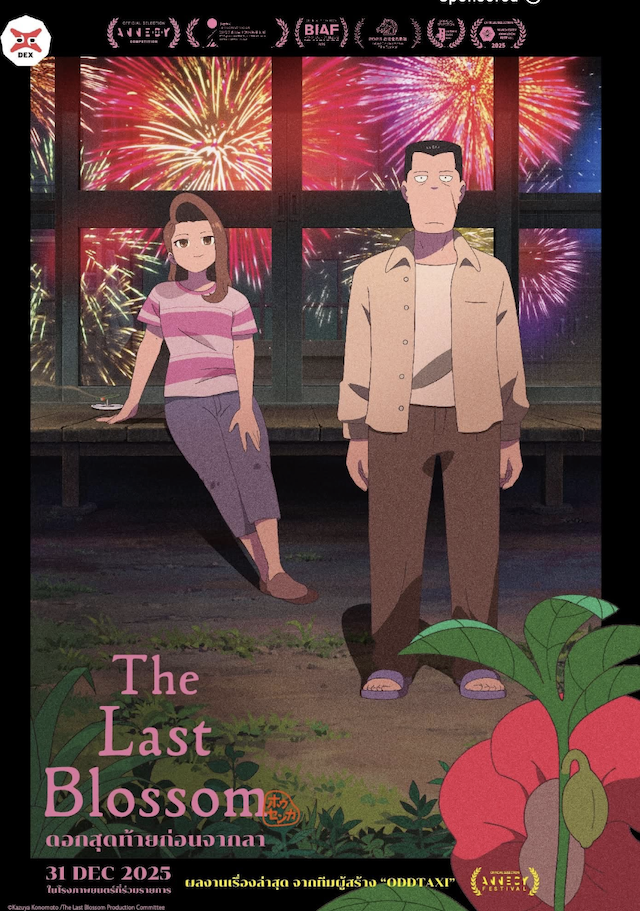
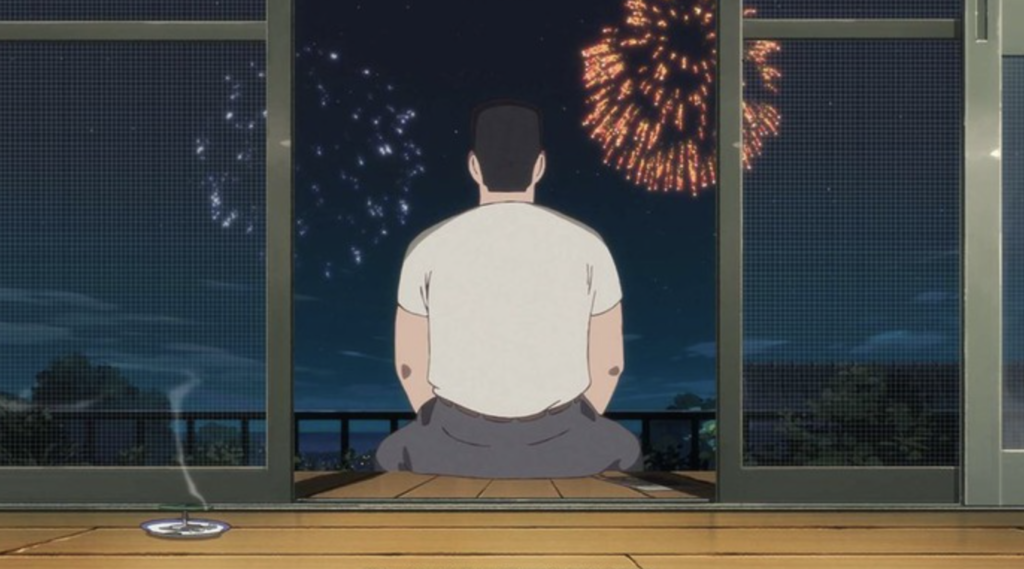
Q: First of all, what really left a strong impression on me was the incredibly beautiful fireworks scene in the movie—it looked as if it had been captured by a drone flying in the sky. What approach did you take to incorporate that imagery into the animation? It was very different from what I’ve seen in other anime—instead of standing in one spot and filming the fireworks rising upward from that vantage point, the fireworks seemed to be rushing right toward the viewer from directly above, which was incredibly striking. Could you tell me a little about the approach you took to creating those fireworks sequences?
Baku Kinoshita: Actually, summer fireworks—specifically, Japanese summer fireworks—have been depicted quite a bit in anime up until now. As you mentioned, there have been quite a few scenes where the camera stays fixed and the fireworks are viewed from a distance. So, I thought that if I did that, it would end up being pretty run-of-the-mill, and I felt it would be better to take a different approach. At the beginning of the film, we offer a brief glimpse into Akutsu and Nana’s private lives, keeping the camera fixed in place for those scenes. Once things settle down, we transition to that sequence, but as soon as the fireworks start, the camera suddenly begins to move—it’s a balance between stillness and motion. It creates a sudden shift in pace. Our strategy was to use that to instantly draw the audience in.
Q: In this work, the fact that Housenka(Rose Balsam=Touch me not) talks adds a strong fantasy element, yet the character is also very worldly-wise and has a sharp tongue, which makes it really interesting. Furthermore, there are moments where it seems to view humans from a bird’s-eye view. Could you tell us a little about the process—specifically, how you and Mr. Konomoto went about crafting those lines?
Baku Kinoshita: For the Housenka, I was conscious of the plant’s unique characteristics this time, so I set it up so that the morning glory itself lives for over a hundred years. In the film, the story revolves around memories being passed down, and through its seeds, the plant passes on those memories—living longer than humans do. So I wanted to portray the wisdom of a human who has lived for over 100 years as a living entity. As you mentioned, this resulted in a character positioned to observe human society from a bird’s-eye view. This concept was essentially based on an idea by Kazuya Konomoto.
Q: The chemistry between Kaoru Kobayashi, who voiced Akutsu, and Pierre Taki, who voiced Housenka, was absolutely perfect. I was wondering—did you have them in mind from the start when casting, or did you hold auditions with various actors before making your selections? Also, could you tell us a little about what specific points you focused on when directing their performances?
Baku Kinoshita: I think the discussion about casting came up once all the storyboards were finished. It’s not that I drew the storyboards with Kaoru Kobayashi in mind, but after I finished the storyboards, we moved on to discussing casting. Basically, I had a very clear image in my mind—rather than just holding auditions, I had a specific person in mind whom I felt was the right fit, so I went ahead and extended an offer to her.
ⓒCourtesy of GKIDS
Q: Moving on to the direction, were there any specific aspects you paid particular attention to?
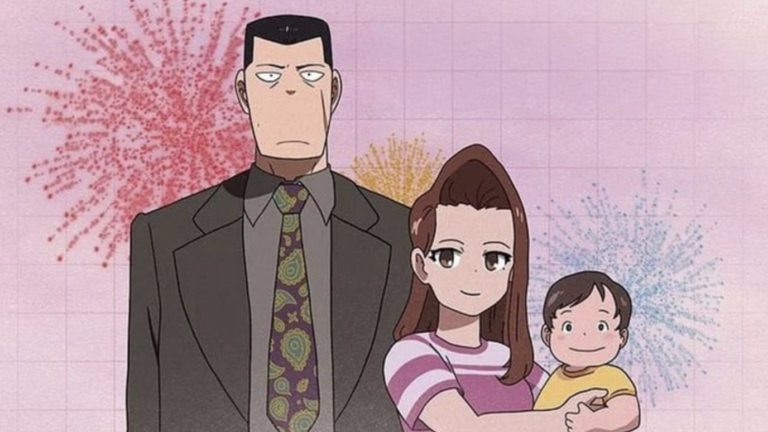
Baku Kinoshita: As for Akutsu, I placed a lot of importance on realism and a raw, visceral quality. I think I discussed that with Kaoru Kobayashi. Since Housenka isn’t human—she’s the only non-human element in this work—I wanted to make her a comical character who transcends humanity a bit. I wanted her to be comical, yet, as you mentioned earlier, also possess a kind of detached wisdom. So I asked Pierre Taki, who played Housenka, to portray her in a way that balanced both comedy and wisdom.
Q: I’d like to ask about Akutsu’s personality. While he does have a very gentle side, I also get the feeling he’s a little different from the typical clumsy guy you’d find in the Showa era. That’s because he observes Tsutsumi(Akutsu’s boss)’s actions, has a solid understanding of the yakuza’s organizational structure, enjoys the trust of his underlings, and handles negotiations after securing money—he doesn’t really come across as a clumsy guy at all; in fact, he seems to be very quick-witted. It feels like he’s a bit too complex to simply dismiss as just a clumsy guy. When portraying this character, what aspects did you focus on to bring out his unique personality?
Baku Kinoshita: Well, yes, I portrayed Akutsu as someone with fewer desires than most people. He had little desire for advancement or anything like that. He wasn’t particularly outgoing, either. While I gave him the trait of being a skilled artist, I portrayed him as an ordinary man. In other words, he had no particular ambition. I portrayed him as someone without ambition, just living his life in a matter-of-fact way. However, as for why he eventually started taking action, I think the simple motivation was that, in order to protect the person he loved, he began to awaken in his own way and started thinking on his feet. I think it was protecting the person he loved that changed him.
[tf-tv]
Q: What I found particularly fascinating about this work was how meticulously the characters’ mannerisms, glances, and daily lives seemed to be portrayed. Even when it comes to a single mannerism, glance, or facial expression, what specific points did you pay attention to when depicting ordinary daily life? In other words, what elements did you prioritize in your work, Mr. Kinoshita?
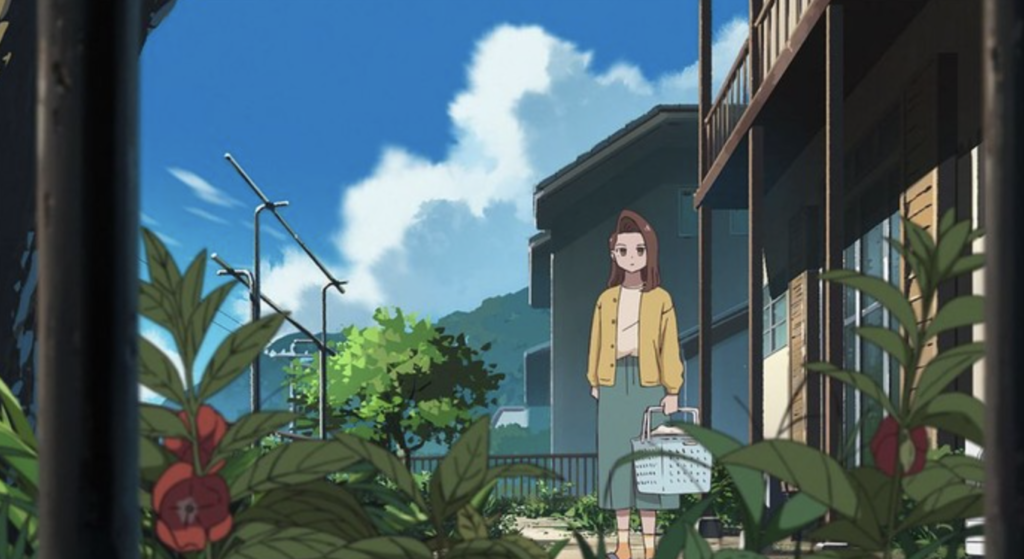
Baku Kinoshita: Just as you said, I crafted the film by paying close attention to every single gesture and movement. Human gestures are actually very precise—I made it a point to consider the meaning behind even a single blink. Whether a character blinks or not conveys their current state of mind. That’s where a lot of information is packed in. Should I include a single blink? I took it to the absolute limit, thinking through every detail—even down to the speed of the blink—as I created the film. So, I approached this film with the belief that human gestures contain a considerable amount of information. That’s why I considered gestures to be a crucial form of expression, and I made sure to convey that to the staff as we worked on the film.
ⓒCourtesy of GKIDS
Q: There’s a scene where the sound of the microwave beeping and the sound of paper tearing lead into the song “Stand by Me.” The way this music is used creates a lingering resonance that builds up to the finale. Including the performance of “Stand by Me” by Manami Kakudo at the end, what were your thoughts on how you intentionally connected the music throughout this film? Also, do you have any special feelings or thoughts about the song “Stand by Me”?
Baku Kinoshita: I think Akutsu’s memories serve as the main foundation for this story. I believe memories are inherently fragmentary. Since this is a story that looks back on Akutsu’s memories, I included scenes where the song “Stand by Me” is played twice—once on a cardboard box and once in a microwave. I structured these scenes to reflect those specific memories and the nature of memory itself. I think this fragmented quality is one way to use music. Also, in addition to the theme song “Stand by Me,” there are other pieces in the soundtrack; I’ve chosen songs with a slightly ethereal quality—floaty, dreamy tunes that feel a bit detached from reality. I took this approach to reflect the nature of reminiscing about memories.
Q: I’ve read in interviews that you, Mr. Kinoshita, were of course influenced by Mr. Miyazaki and Mr. Takahata of Studio Ghibli in Japan, but are there any specific overseas animated films that have actually influenced you?
Baku Kinoshita: I was really influenced by foreign films—especially Disney’s “Snow White”, which I watched so much as a child. When I was in elementary school, we had a VHS player at home, and I watched it over and over again. I was deeply moved by the beauty of Snow White’s movements, the way the animals helped clean the room, and the beauty of nature. I think those experiences were a formative part of my childhood—I consider them to be my formative experiences.
Q: This film was nominated in the Feature Film category at the Annecy International Animation Film Festival, and here in New York, it was screened at Japan Cuts, organized by the Japan Society. What aspects of this film would you like American and international audiences to see?
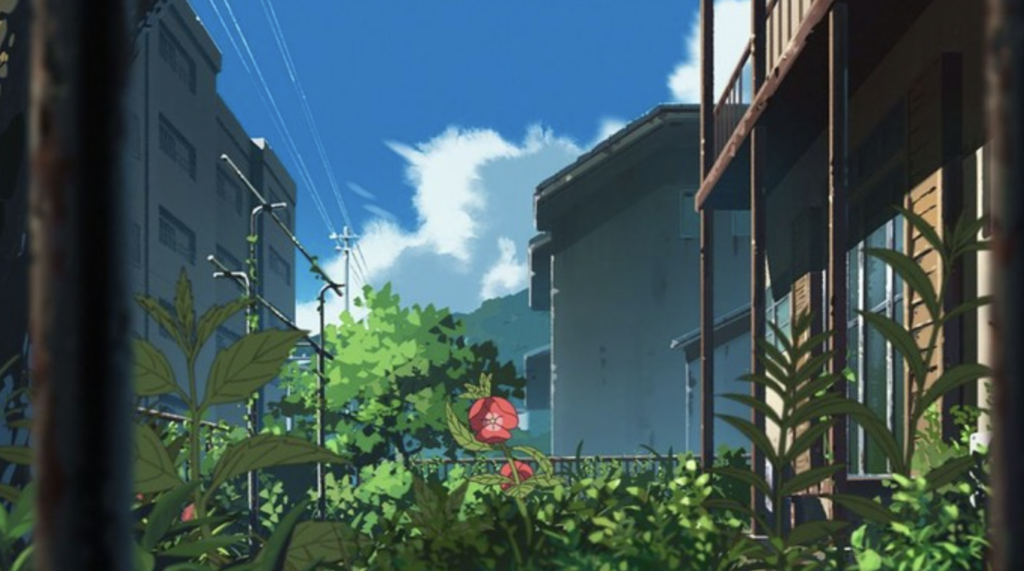
Baku Kinoshita: The film is a very locally rooted story. Of course, the house is a Japanese house, and the townscape is completely Japanese as well. I think there’s a freshness to that which is unique to Japanese culture. As for the themes I’m exploring—such as family love—I believe they’re universal, so I hope that message—that people are the same no matter where they are—comes across even in a foreign setting.
ⓒCourtesy of GKIDS
If you like the interview, share your thoughts below!
Check out more of Nobuhiro’s articles.
Here’s the trailer of the film.