

©Courtesy of the NYFF
Mike Leigh has spent decades proving that catastrophe does not require an explosion. Sometimes, it is simply getting through a seemingly ordinary Tuesday. In the writer-director’s latest project, Tender Loving Care, that modest catastrophe becomes the movie’s entire subject. The filmmaker’s latest dramedy stars Kate O’Flynn in the lead role. She’s joined on screen by Alice Bailey Johnson, Marion Bailey and Paul Jesson.
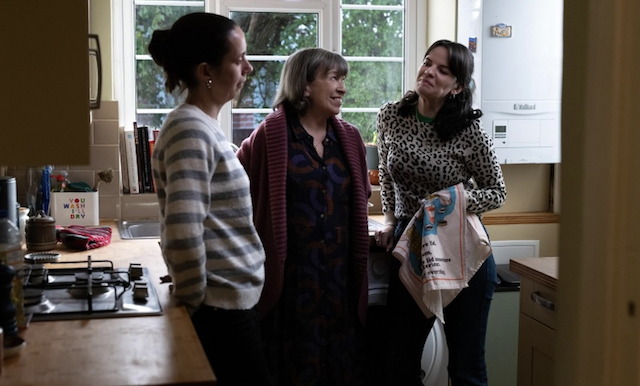
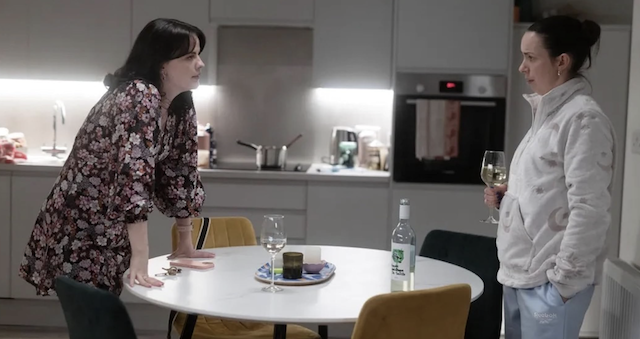
Set in post-Brexit England, Tender Loving Care follows Amy (O’Flynn), a government child protection worker who, after a failed relationship, as she moves back in with her chipper best friend, Rosie (Johnson). The latter, who works as a social services officer, understands her closest confidant’s daily confrontation with anger and resentment.
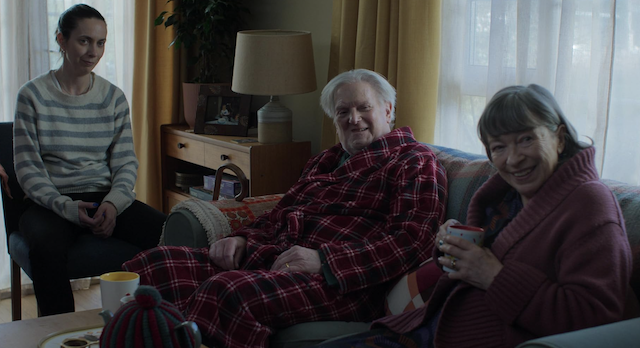
Meanwhile, Amy’s aging parents, Birdie and Geoff (Bailey and Jesson), are concerned about their daughter’s happiness. But their attention shifts when they suddenly have to contend with a crisis of their own. Smiling through their struggles, the family must learn how to contend with the U.K.’s underfunded and fragmented care sector.
Like in his previous movies, Leigh observed people struggling with work, friendship, aging, illness, romantic disappointment and dependence throughout Tender Loving Care. He turned these apparently small pressures into something quietly immense.
However, the filmmaker also proved his versatility in what he has called his last film. The new dramedy doesn’t feature his signature explosive revelations or carefully engineered confrontations. Instead, Tender Loving Care accumulates its emotional force through observation. Its drama resides in the humiliations and consolations of simply continuing.
©Courtesy of the NYFF
That approach makes the movie both deeply moving and deliberately relatable.
Leigh’s films have always shown that people rarely behave like characters in conventional dramas. They hesitate, contradict themselves, change subjects, retreat, joke and misunderstand each other. They ask for help reluctantly and accept it even more reluctantly. Tender Loving Care finds its richest material in precisely those awkward spaces.
O’Flynn gives the movie its most immediately arresting performance as Amy.
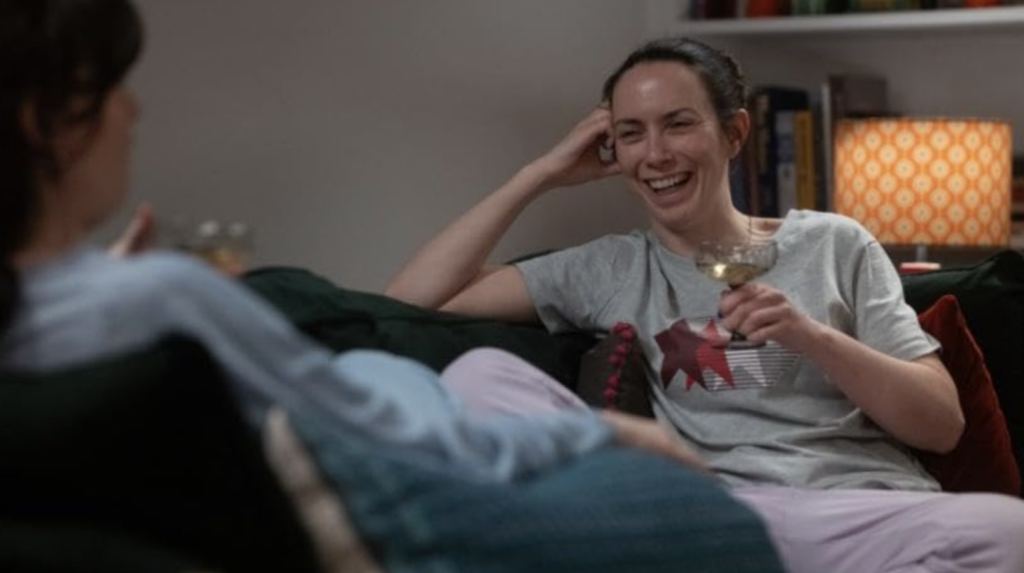
She never treats Amy’s vulnerability as a performance, and doesn’t give a calculated display of suffering. Instead, the recent Emmy-winning star of Widow’s Bay infused her portrayal of Amy with a sense of exhaustion, irritation, embarrassment,and resilience to coexist.
Amy seems perpetually close to being overwhelmed, yet she keeps going. That contradiction becomes the emotional center of Tender Loving Care.
O’Flynn infused Amy with a sense of understanding that resilience is rarely glamorous. The protagonist learns to accept assistance while resenting the circumstances requiring it. The actress’ performance makes those tiny acts feel monumental.
Johnson is equally impressive, bringing remarkable specificity to her character of Birdie. Jesson is similarly excellent, finding humor without diminishing vulnerability. The power of their performances come from the feeling that the characters struggled to find the will to continue living long before the movie’s story began.
The ensemble’s naturalistic acting is therefore the dramedy’s greatest asset.
The actors don’t merely inhabit characters; they also created the sensation of lives continuing beyond the frame. Their emotional reactions are often delayed, for instance, because real people rarely understand themselves immediately.
©Courtesy of the NYFF
That naturalism also prevents the dramedy from becoming sentimental. While the movie’s characters need each other, they can fail each other. That moral complexity gives Tender Loving Care its emotional credibility.
The film’s treatment of aging and mortality is especially subtle. Leigh refused to turn mortality into a grand philosophical speech. Instead, death exists at the edges of ordinary conversations.
Aging also appears through fatigue, changed expectations, illness and altered relationships. The subject becomes more affecting because none of the characters are allowed a grand cinematic response.
Setting the film in post-Brexit England allowed Leigh to portray characters who are overwhelmed by pressures that rarely produce dramatic headlines. Economic uncertainty, loneliness, illness, aging and emotional disappointment coexist without neat solutions. Amy and her family and friends are battered by circumstances without being reduced to victims. Their resilience becomes a quiet form of resistance.
Leigh’s humor is essential to that portrait. Tender Loving Care understands the absurdity surrounding human dependence. Asking for, and accepting, help made the characters feel humiliated. Leigh’s script offers laughs at social discomfort without laughing at vulnerability itself, which makes the characters’ sadness considerably sharper.
The dramedy is just as interested in visually capturing the characters’ physical intimacy as their emotional intimacy. The cinematography is a true standout in the film, as director of photography Lucy Bristow repeatedly favors close-ups and constricting framing. The images an, particularly their intimate framing, emphasize Amy and her fellow characters’ at-times emotional opacity.
Editor Tania Reddin deserves particular credit for maintaining that restraint.
The movie’s editing seems deliberately subordinate to Leigh’s observational method. Scenes are not constantly sharpened toward conventional dramatic escalation. Instead, conversations, pauses, digressions and encounters accumulate. Meaning emerges gradually through repetition and proximity.
©Courtesy of the NYFF
Gary Yershon’s score in the dramedy follows the same principle of discretion. It’s marimba-forward, sparse, contemplative and notably unobtrusive. The music creates atmosphere while leaving the actors in command. Its restraint complements the film’s larger commitment to observation.
Still, Tender Loving Care is unfortunately not without a significant limitation. It doesn’t follow Leigh’s conventional style of storytelling. There aren’t any major plot engine driving the plot forward. There also isn’t a sequence of escalating revelations demanding increasingly explosive confrontations. As characters circle subjects rather than confront them, the movi’’s everyday rhythms become both its strength and its limitation.
Ultimately, Tender Loving Care may not satisfy viewers seeking the sharper conflicts of Leigh’s earlier films, including Secrets & Lies and Vera Drake. Yet the filmmaker’s quieter approach in his latest feature feels deliberate, allowing ordinary frustrations to accumulate into something emotionally resonant.
The dramedy’s restrained storytelling can occasionally feel slight, but its performances provide a compelling counterweight. O’Flynn anchors the ensemble with a deeply human portrayal of resilience, embarrassment and dependence. Around her, Johnson, Bailey and Jesson create a believable world shaped by affection, frustration and uncertainty.
Tender Loving Care ultimately emerges as a deeply humane portrait of people enduring lives that rarely offer easy answers. Leigh finds humor in dependence, tenderness in disappointment and dignity in the struggle to continue. Bristow’s close-ups preserve the characters’ mystery, while Reddin’s editing allows their lives to unfold without forced dramatic acceleration. Yershon’s understated score further reinforces the movie’s contemplative rhythms. The new dramedy may be quieter than Leigh’s previous work, but its emotional subtlety makes it a fitting final statement.
Overall: B+
Tender Loving Care will ave its New York Premiere in the Main Slate section at the 64th New York Film Festival (NYFF). The dramedy will screen on Monday, September 28, 2026 at Alice Tully Hall.